


Europe saw one of the most significant influxes of migrants and refugees in its history in 2015. The crisis shows no sign of slowing anytime soon.
Amid accusations from Turkey that it did not make good on promises, the EU has now announced it would ban rubber boat sales to Libya, while Italy, an EU member state, has delayed a law that would allow citizenship to the children of immigrants.
More than 73,300 migrants have reached Italy so far this year, a 14 percent increase over the same period last year.
The deadly crisis
According to the UN's refugee agency, over 2,000 asylum seekers have died or gone missing, feared drowned since the beginning of the year amid calls for the central Mediterranean route to be closed.
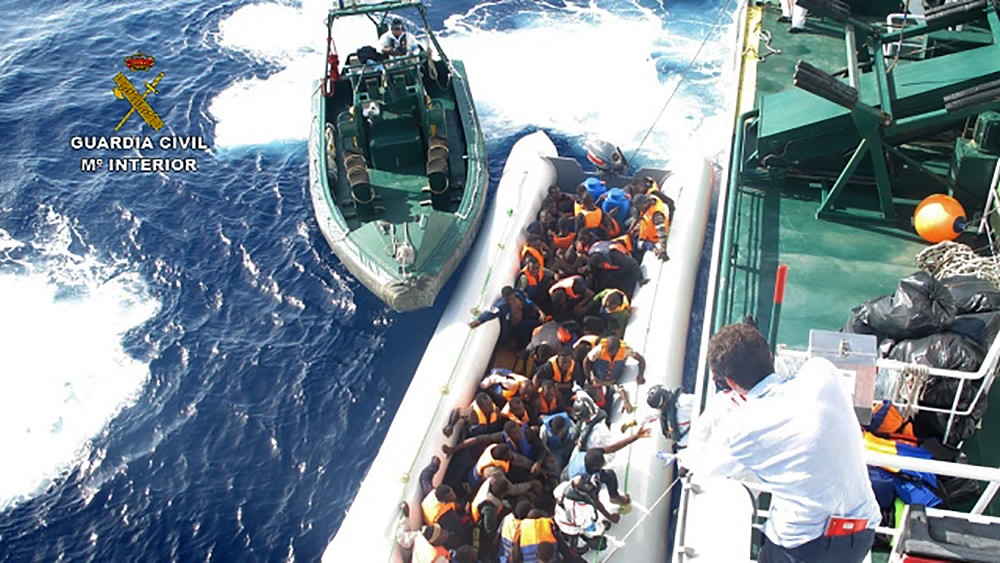
A handout picture released on June 22, 2017 by Spanish Interior Ministry shows the rescue of sub-Saharan migrants by the Spanish patrol boat Rio Segura of the Maritime service of the Spanish Civil Guard (R), off the coast of Libya. /VCG Photo
The EU said in a statement that the foreign ministers have agreed to limit exports of inflatable boats and outboard motors to Libya to curb the smuggling of migrants.
Many observers suggest no significant change has been seen over the past 24 months as more and more people make the dangerous trip on a daily basis.
A large number of people have fled Africa and the Middle East as result of terror and civil war. They risked their lives while trying to reach Europe hoping for a better life.
Back in 2015, more than a million people landed at the European coasts as compared to 280,000 a year before. The scale of the crisis continued in 2016.
Migrants travel by boat from Turkey to Greece or Libya to Italy and attempt to reach Germany and other European countries through Western Balkan countries.
The blame game
Rescue charities and rights groups accuse the EU of failure.
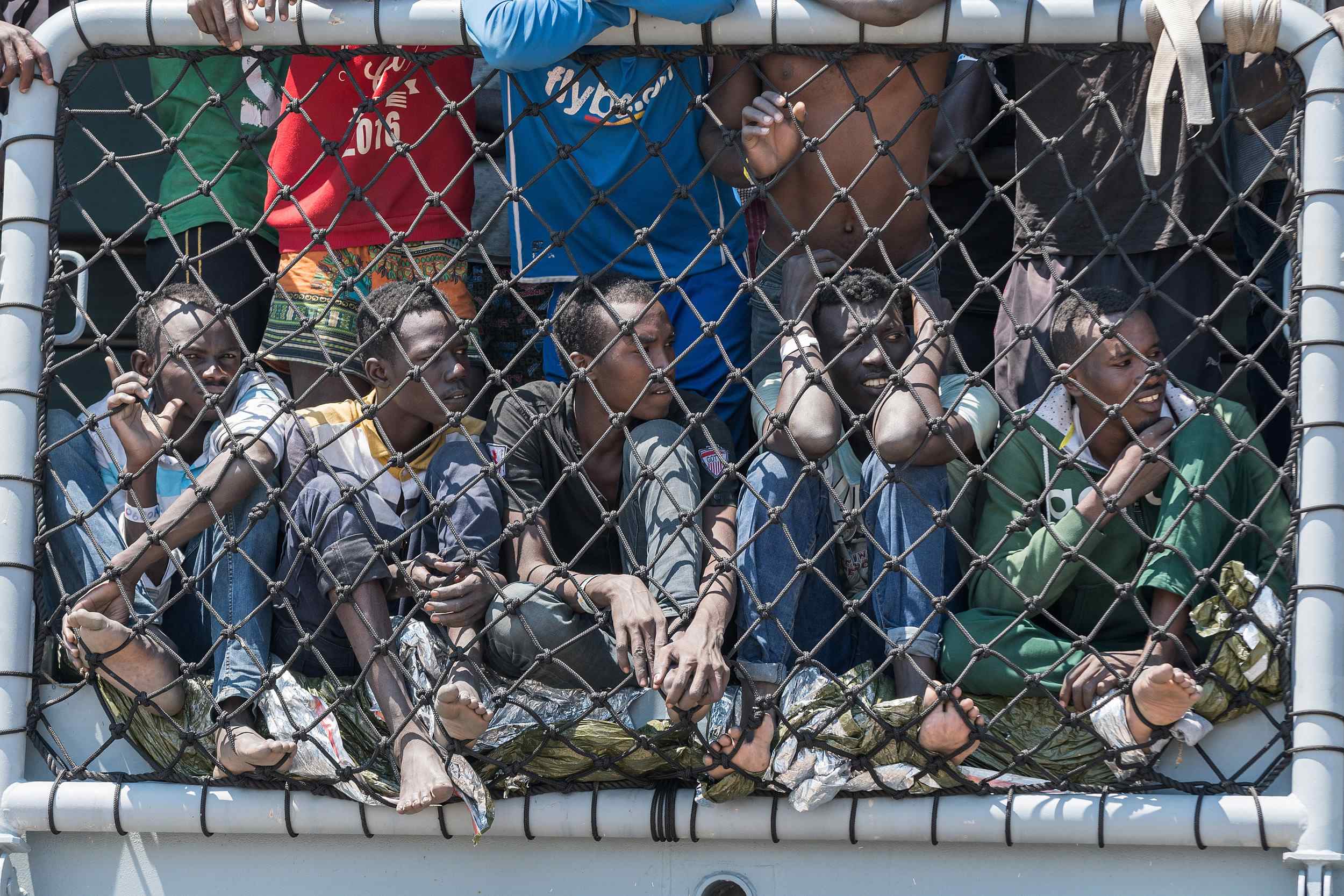
Some migrants during the landing stages of migrants from the German military ship Rhein. /VCG Photo
Amnesty International issued a sharp rebuke to the EU in a recent report saying the block was ignoring abuses in Libyan detention centers.
This blame game is not limited to the rights groups but has also been witnessed in the EU and the member states.
Hungary last year suggested the EU has itself to blame for the migrant trouble.
Italy complained of pressure calling on its EU neighbors to help with the growing humanitarian crisis.
Disappointed by their lack of action, government officials in Rome threatened to use “nuclear option” by issuing temporary EU visas to thousands of asylum seekers who enter the country to travel across Europe.
The UN High Commissioner for Refugees Filippo Grandi has called on the international community to increase assistance for Italy.
"This cannot be an Italian problem alone," he said.
He said the events in the Mediterranean nation hint at an unfolding tragedy.
Nowhere to go
The situation has worsened as some EU countries have tightened border control.
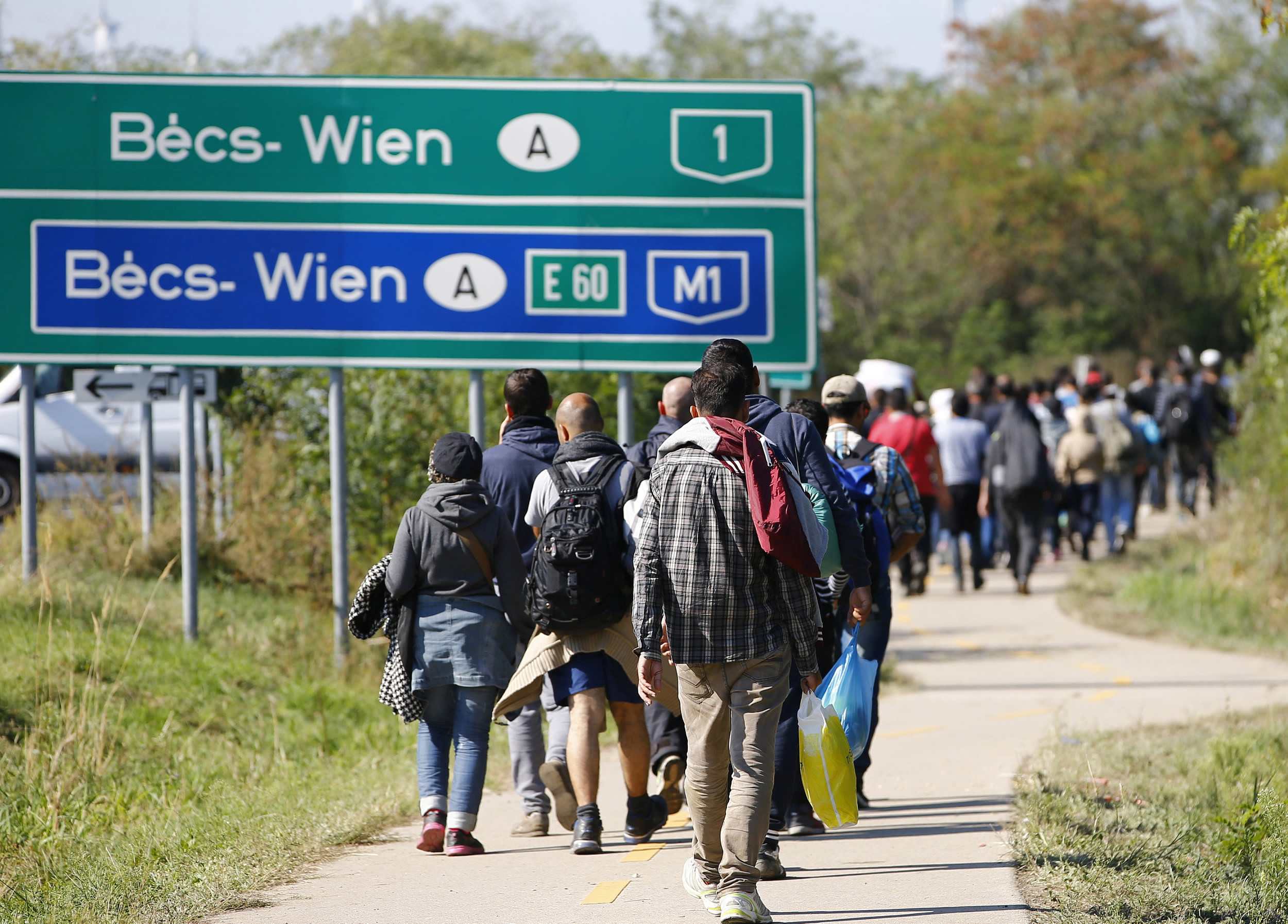
Migrants walk on a road towards the crossing point between Hungary and Austria in Nickelsdorf, September 12, 2015. /VCG Photo
Hungary was the first country that attempted to block migrant routes with a razor-wire fence. Many lashed out at Budapest, but some of countries like Slovenia and Bulgaria later followed the move.
Austria has announced a refugee entry cap, while many Balkan countries said they would only allow Iraqi and Syrian migrants.
Political toll
German Chancellor Angela Merkel faced criticism as 1.1 million asylum seekers arrived in the country in 2015. Her open border policy was seen as the reason for the influx.
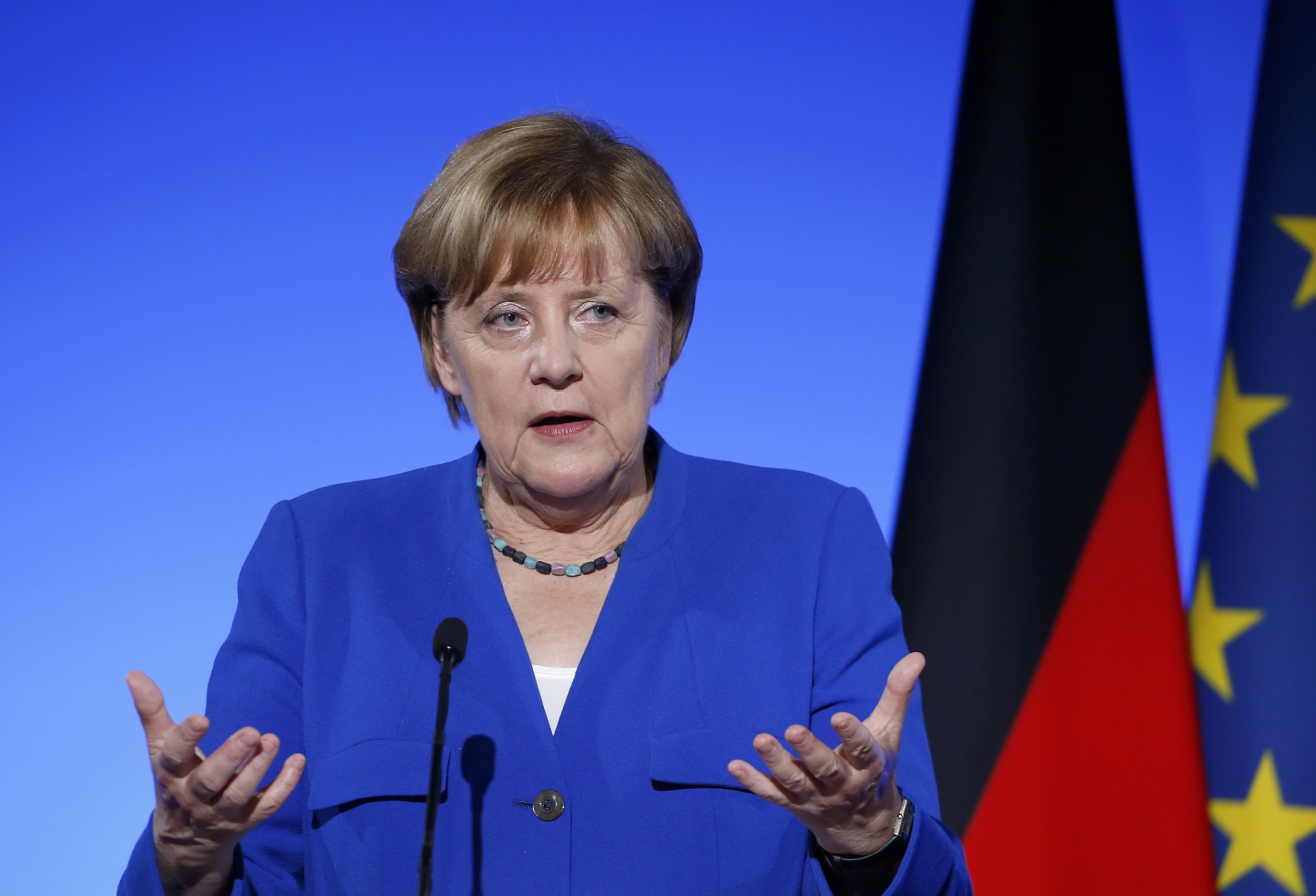
German Chancellor Angela Merkel faced criticism over her open door policy. /VCG Photo
Some fear she might lose the upcoming election in September because of her unpopular decision.
The rise of the far right in some European countries is also blamed on the migrant crisis.
A migrant deal between the EU and Turkey that was reached in 2016 also appears to be in limbo. The EU agreed to give Turkey incentives to stop migrants from making the dangerous journey to Greece or Italy. Ankara now says the EU has not fulfilled its promises.
A cursory Internet search shows the EU still faces a challenge that has not faded out. The potential for a difference of opinion amongst the member states remains high.
(With inputs from agencies)
