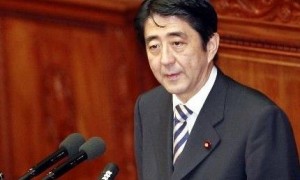


Abe gave a keynote speech on Friday at the opening of the yearly Shangri-la Dialogue in Singapore. But as our reporter Han Bin reports, Chinese military scholars say Abe isn’t qualified to comment on international law, and it’s Japan, not China, that threatens regional security.
Singapore, modern, diverse and quiet.And as summer approaches, things are heating up.
Regional powers are meeting to address security issues that are raising the temperatures along the eastern flank of the Pacific rim. Japanese Prime Minister Shinzo Abe has called for a bigger security role for Japan. And he stressed respect for the rule of law.
"Japan offers its utmost support for the efforts of ASEAN countries, as they work to ensure the security of the seas and the skies, and thoroughly maintain freedom of navigation and freedom of flight." Shinzo Abe said.
Although he did not name China in his speech it has been widely interpreted as targeting China.
Abe says that Japan-US relations is the cornerstone for Asian security, and he called on Asean countries to say "no" to any form of coercion in maritime disputes. His remarks have been strongly criticised by Chinese scholars.
"Abe wants to use China as a slogan to mobilize other countries with Japan, improve its international role." Colonel Xu Qiyu, research fellow at National Defence university said.
"But actually, such a military alliance is a left over from the Cold War. It was set up in the first place to be confrontational against a rivery military block. In the 21st century, this kind of mentality based on fighting together against a potential enemy is no longer valid." major Gen. Yao Yunzhu, PLA Academy of Military science said.
Abe has explained his stepped-up push to lift a ban that has kept Japan’s military from fighting overseas since World War Two. As he named the policy as "proactive contribution to peace".
China countered that it’s Japan, not China, which threatens security by stretching the limits of Japan’s post-war, pacifist constitution to bolster the Japanese military.
Chinese political analysts argue that Abe’s speech is a veiled attack carefully calibrated to escalate the war of words between the two nations.
China-Japan relations are at their lowest point since the establishment of diplomatic ties some 40 years ago. A further deterioration would have significant implications for Asian security and the global economy. Many scholars say what’s needed is a fundamental change in policies. Otherwise, it will be hard to get their relationship back on a productive, mutually beneficial track.